
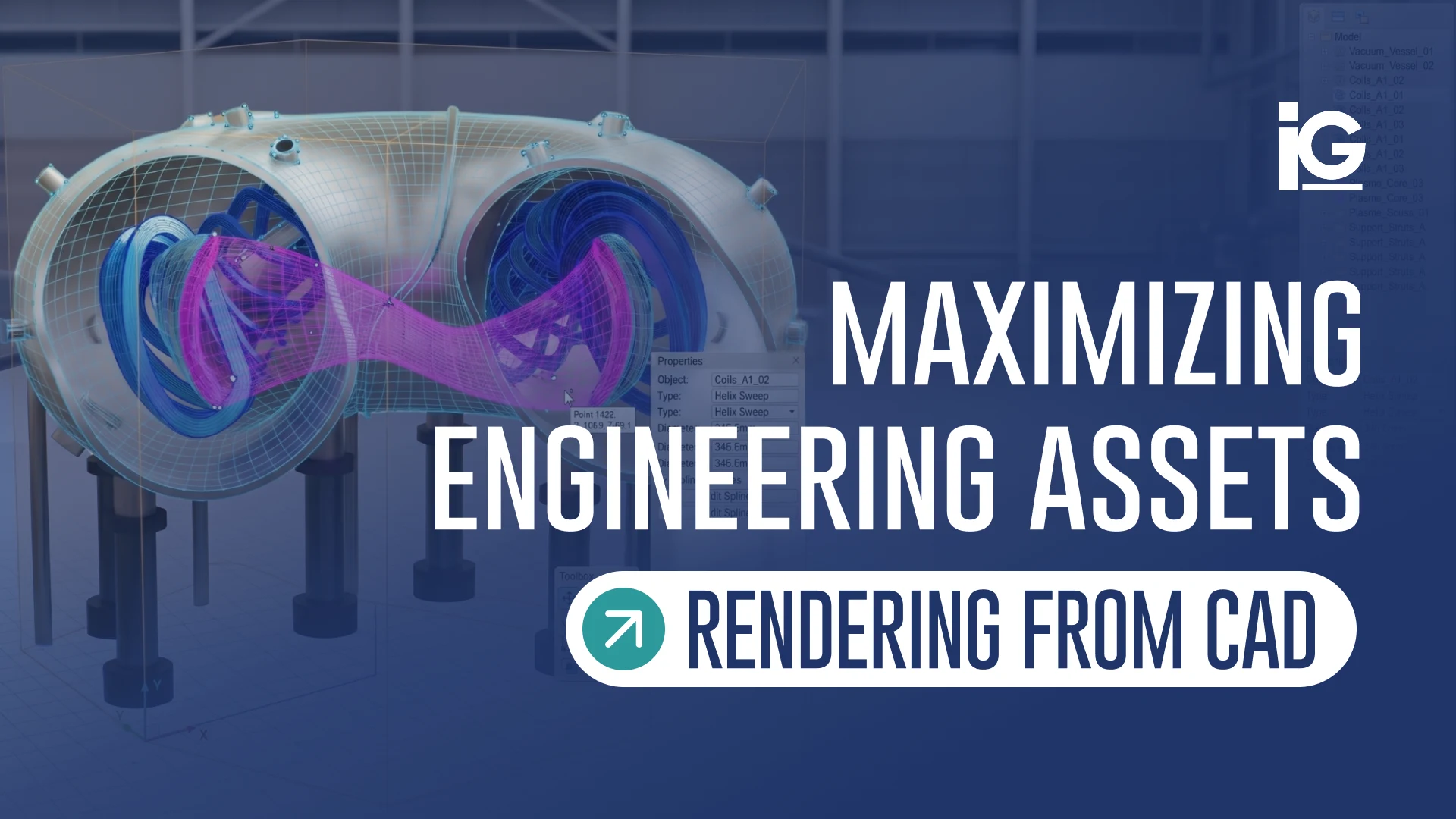
Technical product visualization is the process of transforming CAD models and engineering data into photorealistic renders, animations, interactive experiences, and technical illustrations that help manufacturers communicate complex products and technologies. Manufacturers use these visual assets to communicate products ranging from industrial machinery and HVAC systems to medical devices, automation equipment, energy technologies, and other engineered products. They’re built directly from existing CAD and engineering files to provide a precise representation of the final product without relying on photography, physical prototypes, or hand-drawn illustrations.
What Is Technical Product Visualization?
Technical product visualization is the process of transforming CAD models and engineering data into visual assets such as photorealistic 3D renders, product animations, interactive viewers, and technical illustrations. It’s extremely useful in showcasing how complex products, machinery, and systems look and operate, even without any existing prototypes.
Unlike traditional photography, technical product visualization is created directly from original CAD files used to design the product. That means every visual is based on the same engineering geometry rather than an artist’s interpretation. Plus, it can produce a flexible library of technical visuals that engineering, sales, and marketing teams can reuse.
For manufacturers, the real value isn’t the visuals themselves; it’s in what they let a manufacturer do: (1) accelerate product launches, (2) improve product understanding, (3) enable sales conversations, (4) support training and service, and (5) maximize the value of existing engineering data.
Why Manufacturing Products Require a Different Approach
Industrial and commercial products require more than attractive imagery. Buyers often need to understand how equipment is built, how it operates, and how its components work together before making a purchasing decision.
There are also three specific factors behind that:
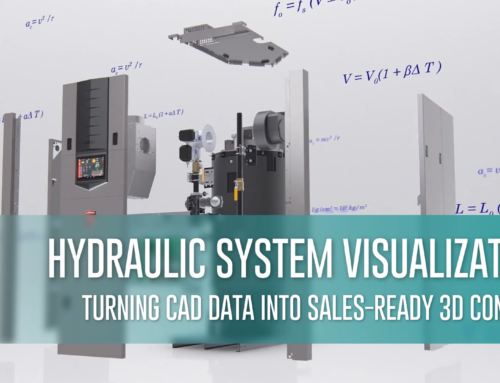
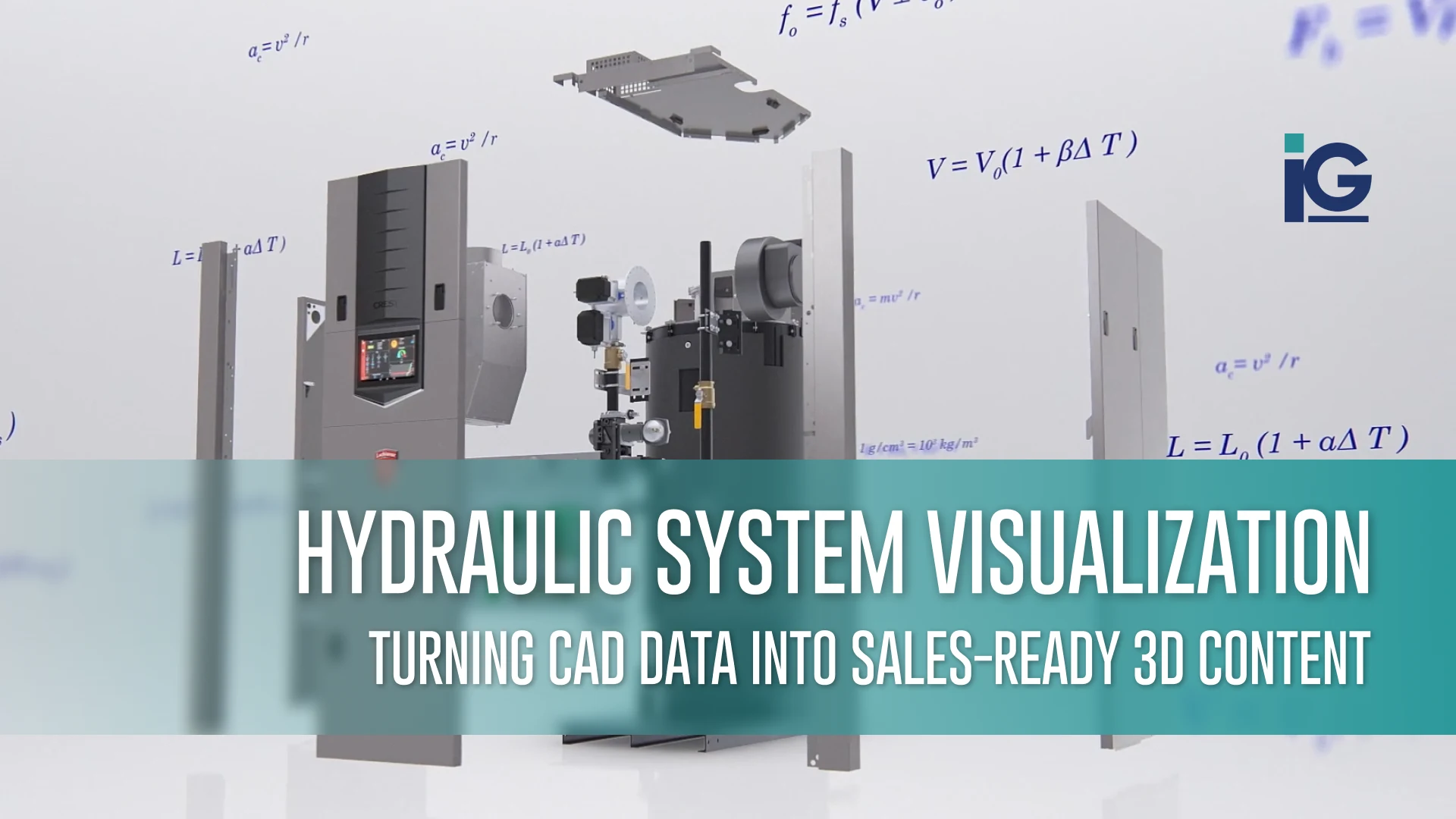
A buyer choosing between two boilers or two HVAC units is often looking at what’s inside the housing (bearing class, weld points, serviceable components) and not just the exterior shell. CAD-based visualization enables the creation of cutaway views, exploded assemblies, and animations that clearly show these details.
1. Internal components influence buying decisions
A buyer choosing between two boilers or two HVAC units is often looking at what’s inside the housing (bearing class, weld points, serviceable components) and not just the exterior shell. CAD-based visualization enables the creation of cutaway views, exploded assemblies, and animations that clearly show these details.
2. It’s evaluated by a committee and not just a single buyer
Purchases of industrial machinery, medical devices, and other complex products often involve engineers, procurement teams, operations managers, and executives. This means visual content needs to communicate technical accuracy while remaining clear enough for non-engineering stakeholders.
3. Products are marketed even before manufacturing
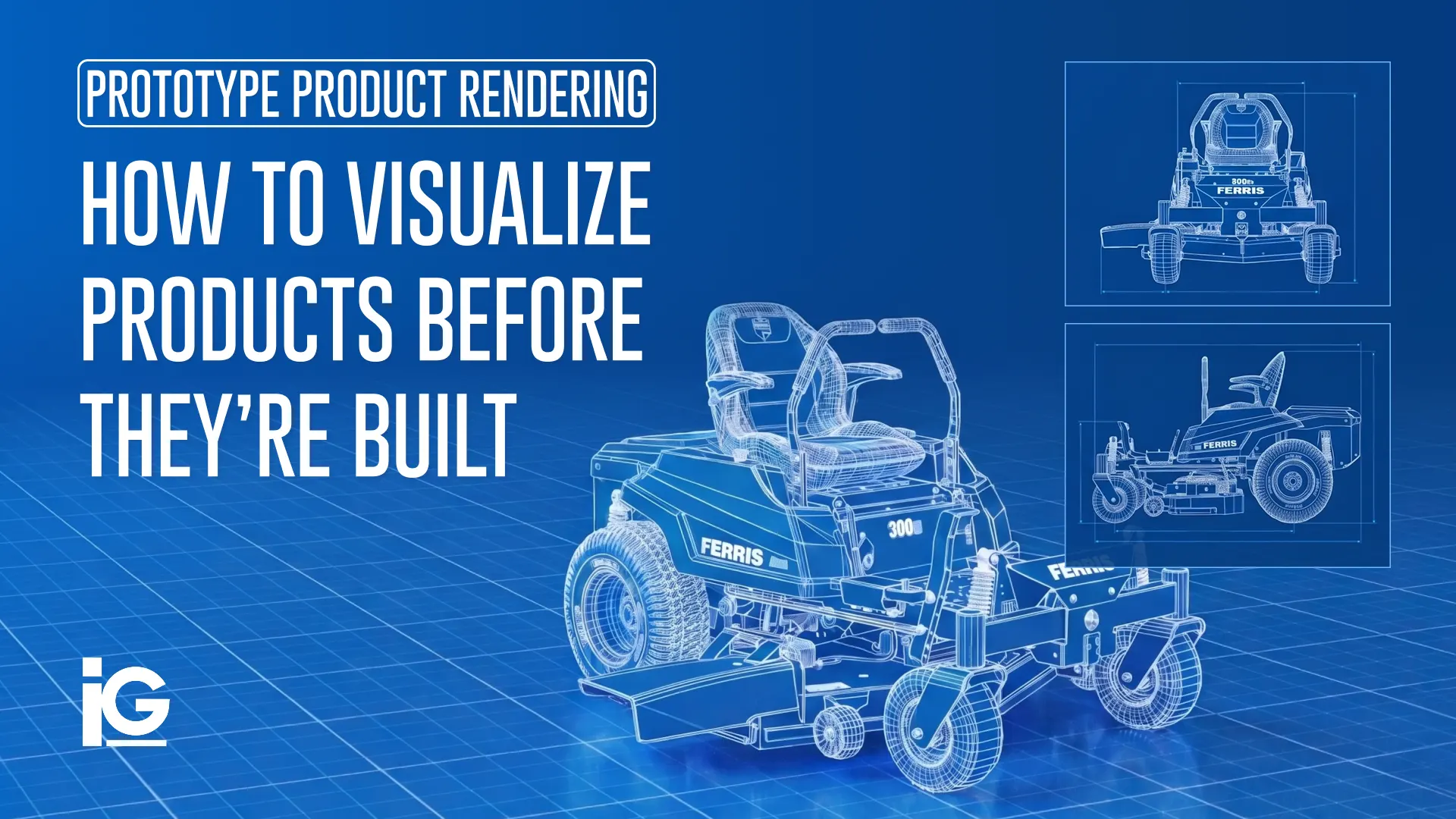
Many manufacturers begin sales, quoting, and product launches before a production-ready unit exists. Technical product visualization is often the only way to show the product at all during that window.
What Formats Can Technical Product Visualization Produce?
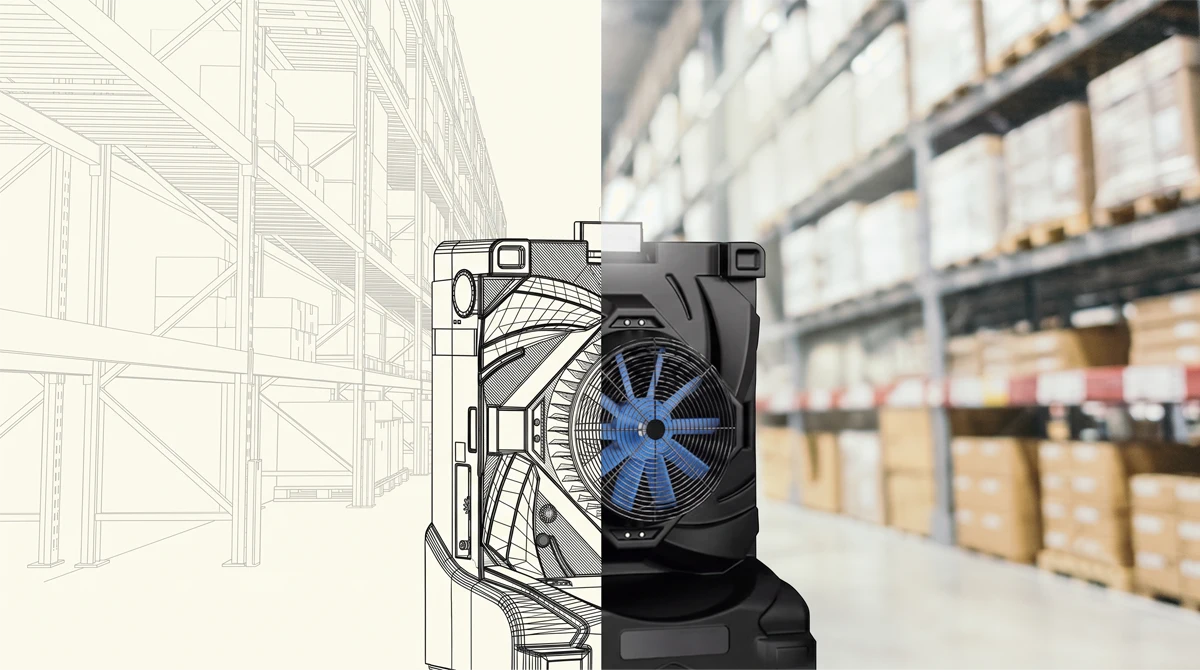
Technical product visualization produces five core formats: photorealistic renders, 3D animations, interactive viewers, technical illustrations, and cutaway views. Each format answers a different question that a buyer, dealer, or technician might ask. Plus, the same CAD model can often be repurposed into multiple formats, allowing manufacturers to maximize the value of the engineering work that’s already been completed.
| Visualization Format | Primary Purpose | Common Applications |
|---|---|---|
| Photorealistic 3D Renders | Show finish, materials, and form before manufacturing | Product launches Websites Catalogs Trade shows |
| 3D Animations | Demonstrate operation, assembly, or internal mechanisms | Sales presentations Product explainers Training content Launch videos |
| Interactive 3D Viewers | Let buyers explore or configure the product themselves | Product pages Distributor portals Sales enablement |
| Technical Illustrations & Exploded Views | Show part relationships and assembly order without relying on language | Installation guides Service manuals SOPs |
| Cutaway & Ghosted Views | Reveal internal components without disassembling the physical unit | Engineering sell sheets Training content Maintenance guides |
Each format above has its own dedicated breakdown elsewhere on the Info-Graphics blog. If you’re researching a specific application, these go deeper:
- Photorealistic 3D Renders — Get Photorealistic 3D Visuals For Your Product Catalog
- 3D Animations — How a 3D Product Animation Studio Elevates Industrial Marketing
- Interactive 3D Viewers — Interactive Documentation for Industrial Machinery
- Technical Illustrations & Exploded Views — Industrial Machinery Visualizations from CAD: How We Do It at Info-graphics
- Cutaway & Ghosted Views — 3D Animation Agency for Industrial Equipment Explainer Videos
Benefits Beyond Marketing
Technical product visualization is often associated with product marketing, but its value extends far beyond promotional content. When used strategically, the same visual assets can support multiple departments, improving consistency while reducing duplicated effort across the organization.
1. Accelerates Product Launches
Marketing teams no longer have to wait for finished prototypes or professional photography before building launch materials. Websites, brochures, sales presentations, and promotional campaigns can be developed while manufacturing is still underway. For companies introducing multiple products each year, this can significantly reduce launch timelines.
2. Improves Technical Understanding
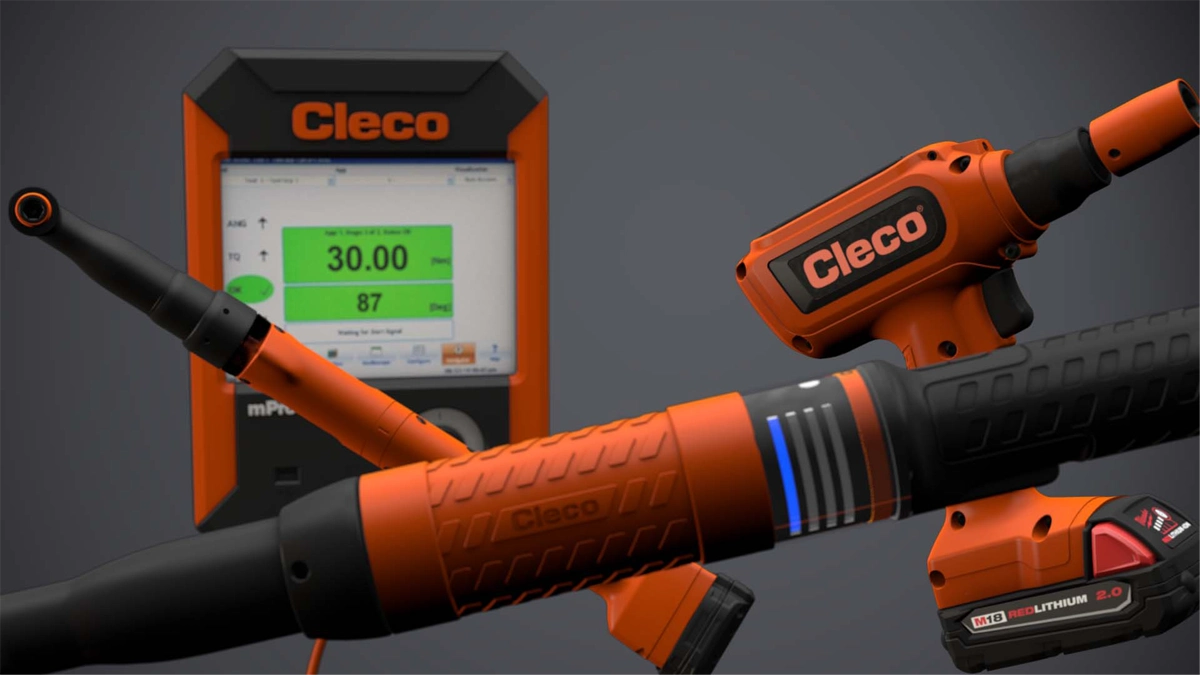
Complex products often include internal mechanisms, hidden components, or operating processes that are impossible to explain through conventional photography. Clear visual communication helps engineers, buyers, operators, distributors, and executives understand how a product works and what sets it apart. Your audience gets to understand your product at the appropriate level of detail. This leads to more informed decisions and fewer misunderstandings throughout the buying process.
3. Support Sales Conversations
Sales teams regularly explain products that customers cannot physically inspect. Technical animations, interactive viewers, and detailed renders help answer common questions ranging from capabilities to installation requirements. For prospects, this makes it easier for them to evaluate the product before purchase. This reduces uncertainty during that process and helps prospects make faster decisions.
4. Creates Better Training Resources
Consistent product visuals make it easier to educate operators, distributors, service technicians, and internal teams. Instead of creating new materials for each training initiative, manufacturers can build a reusable library of product assets to support their training initiatives. A single CAD file can help with onboarding, maintenance documentation, learning platforms, and customer education.
5. Increase the ROI on Engineering Data
Every engineering project produces valuable CAD models and technical data, yet much of that information remains confined to design teams. Technical product visualization transforms those assets into resources that marketing, sales, customer support, and training teams can also use. Rather than recreating information for every department, manufacturers can extend the value of existing engineering work across the business.
How Info-graphics Approaches Equipment Visualization
The goal of every effective technical product visualization is to help manufacturers communicate complex products clearly and consistently across every stage of the customer journey. At Info-Graphics, that’s the standard we build every project around through:
Engineering-First Process
We don’t start with a blank canvas; we work with what you’ve already built. Before any rendering, animation, or illustration begins, we evaluate your existing CAD models and engineering data to determine how far that single source can carry you and how many formats it can support without remodeling
CAD-Driven Accuracy
Every render we produce traces back to the same engineering geometry so nothing on the sales pages contradicts what’s in the service manual.
One Engineering Model Supporting Multiple Departments
The same CAD source can be built out into marketing renders, sales-enablement animations, and service documentation, so you’re not paying to recreate the same product for every team that needs to explain it.
Reusable Visual Assets Libraries
We build with reuse in mind from the start. What’s created for a launch can be repurposed for training, service, and the next campaign, extending the value of your engineering data well past the original project.
Combined Marketing and Engineering Expertise
The Info-Graphics team understands both the engineering behind your products and the marketing challenges of selling them. That combination allows us to turn complex technical information into content that accurately represents your products while helping customers understand their value.
Ready to see what your CAD data can support? Talk to our team and let’s see what your existing engineering assets can turn into.
Frequently Asked Questions (FAQs)
1. What is the difference between technical product visualization and product photography?
Product photography requires a finished physical product and captures only what the camera can see. Technical product visualization is created from CAD models and engineering data. It allows manufacturers to produce accurate visuals before production, show internal components, create exploded views, and generate images or animations from any angle.
2. Does technical product visualization require finished CAD models?
No, it can begin once the core design is finalized. Manufacturers frequently create visualization assets before production starts, allowing marketing, sales, and training materials to be developed while final finishes or details are still being completed.
3. Is technical product visualization only used for marketing?
No, although it’s commonly used to support product launches and sales, it is also widely used for installation guides, technical documentation, maintenance manuals, operator training, and distributor education. A single CAD model can often be repurposed into multiple visualization formats for different departments.
4. Why do manufacturers invest in technical product visualization before production?
Manufacturers often create visualization assets before production because they can begin marketing, sales enablement, and training activities even without the finished product. This helps accelerate product launches while ensuring all teams work from the same data.







Leave A Comment