The best product image we ever created didn’t require a prototype, a photo shoot, or a single piece of equipment to leave the factory floor.
In fact, the product didn’t even exist yet.
It started with a CAD file.
Today, leading manufacturers know that the same engineering assets used to design a product can also power product launches, sales enablement, training, ecommerce, and customer
support content—often months before the first production unit is built.
Leveraging Underutilized Engineering Assets – Your CAD Files Are More Valuable Than You Think!
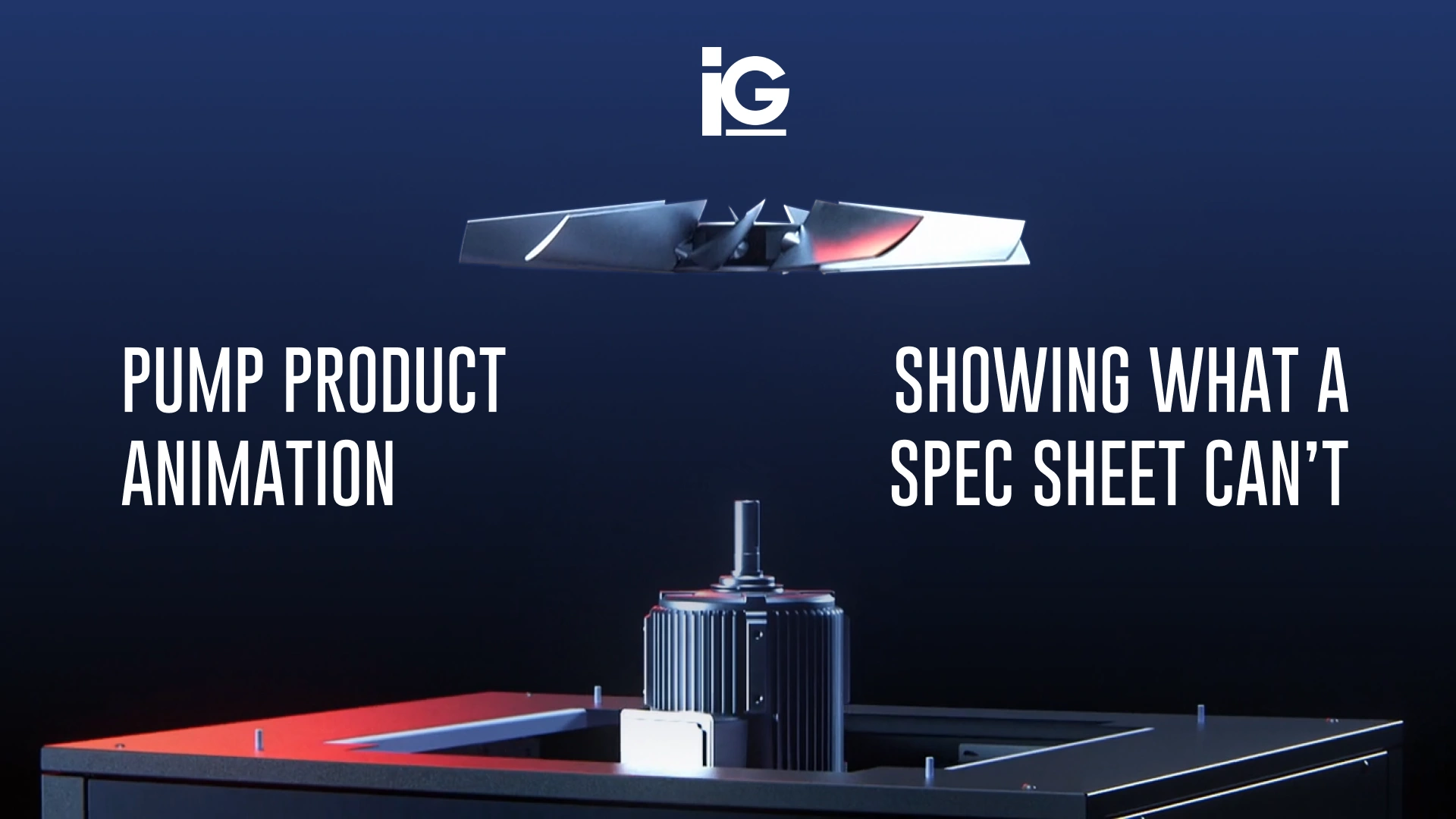
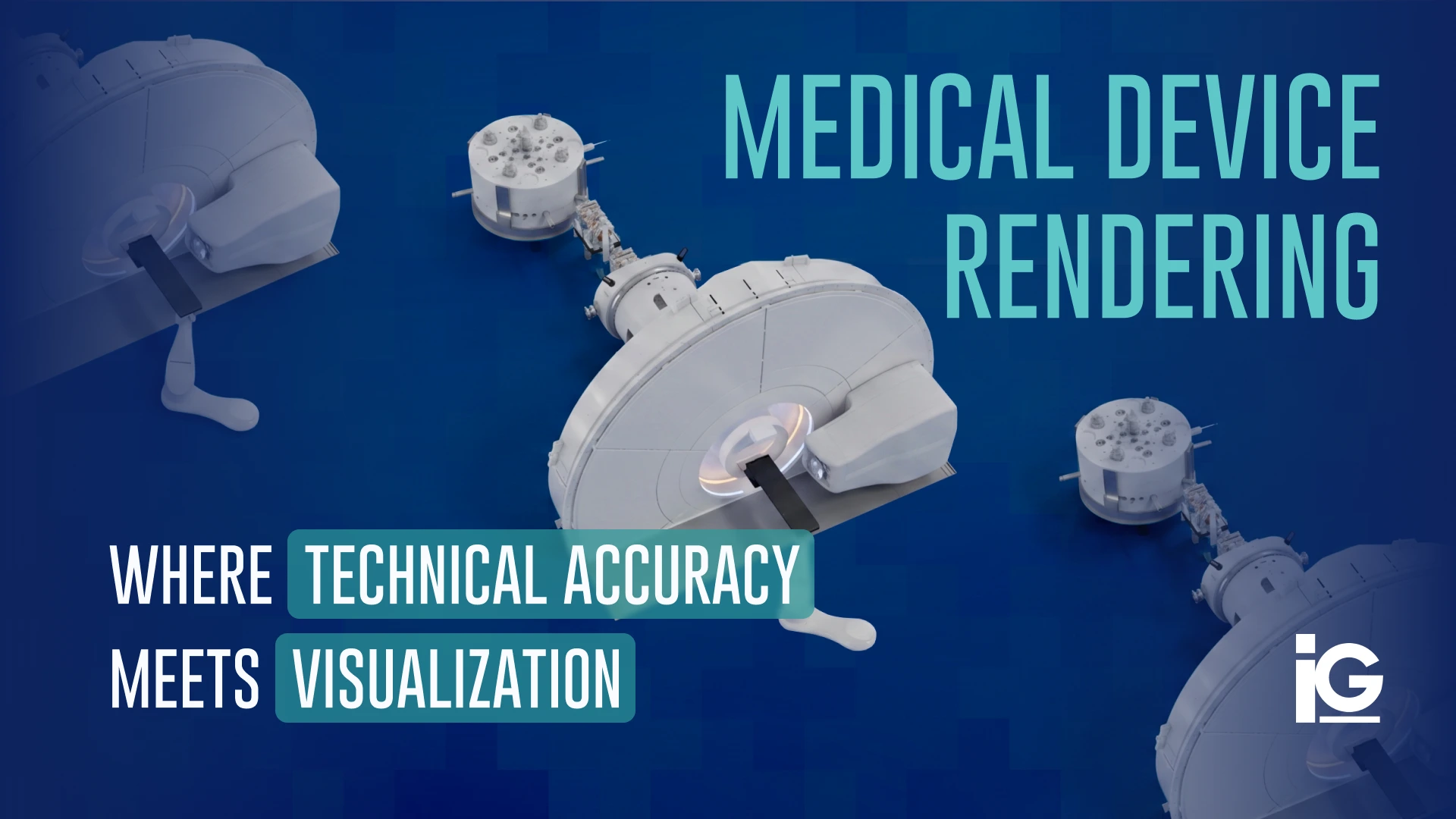
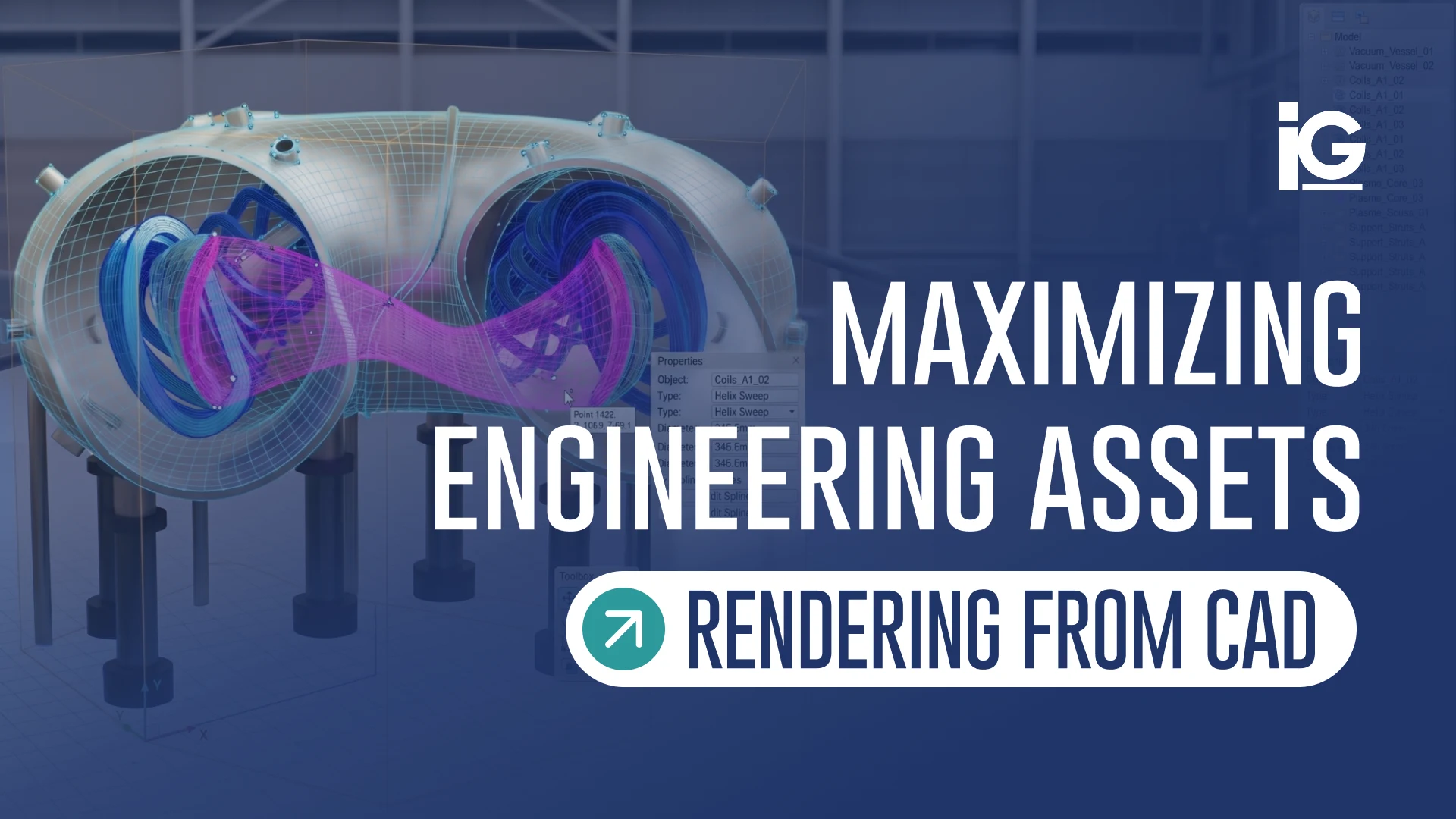
Industrial machinery visualization is the process of creating photorealistic and highly accurate 3D images or animations of machinery directly from CAD or source files. The results look like a professional photograph, but it’s done fully digitally.
This is used to produce:
- Hero images for product pages, spec sheets, brochures, and catalogs
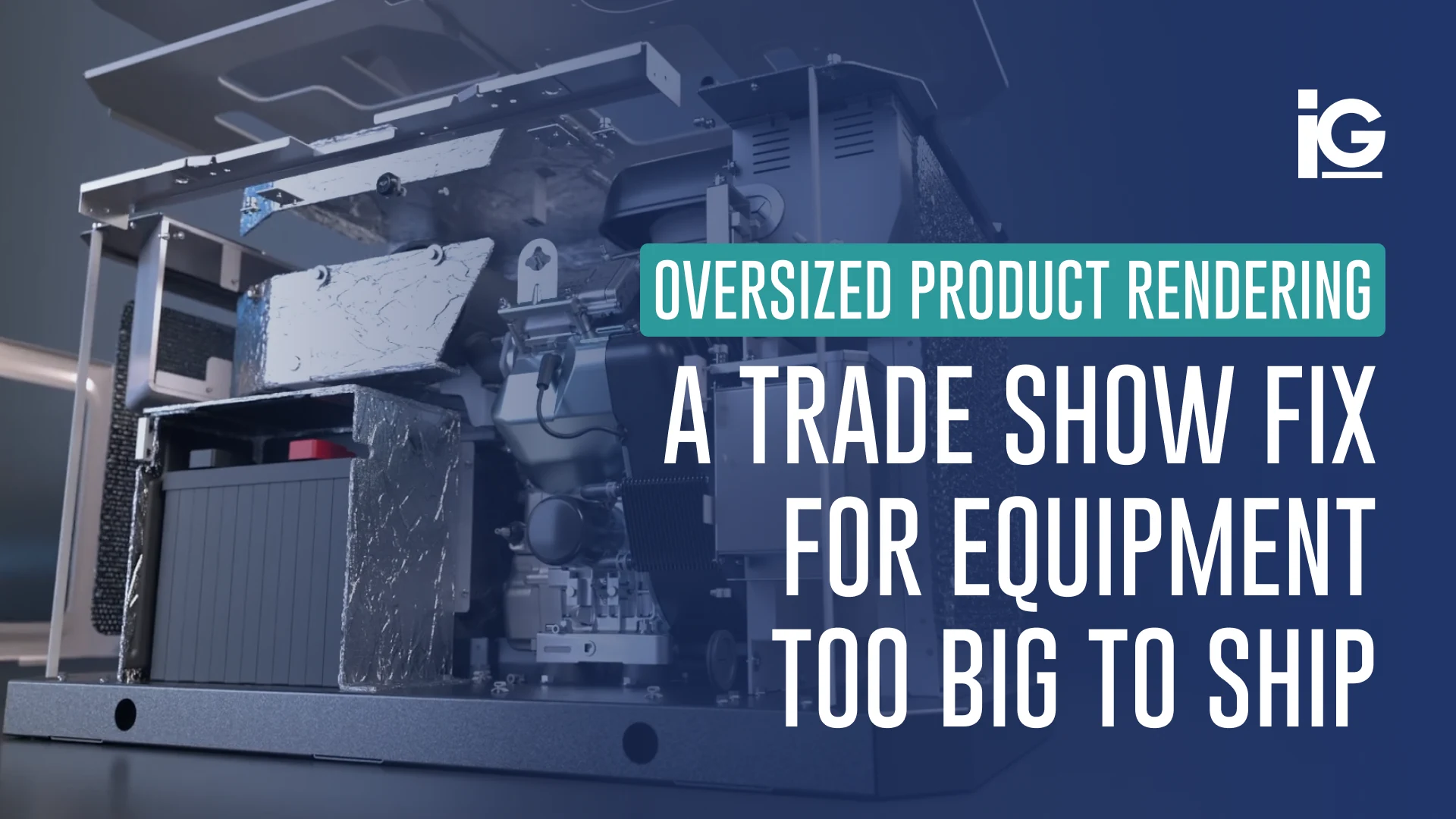
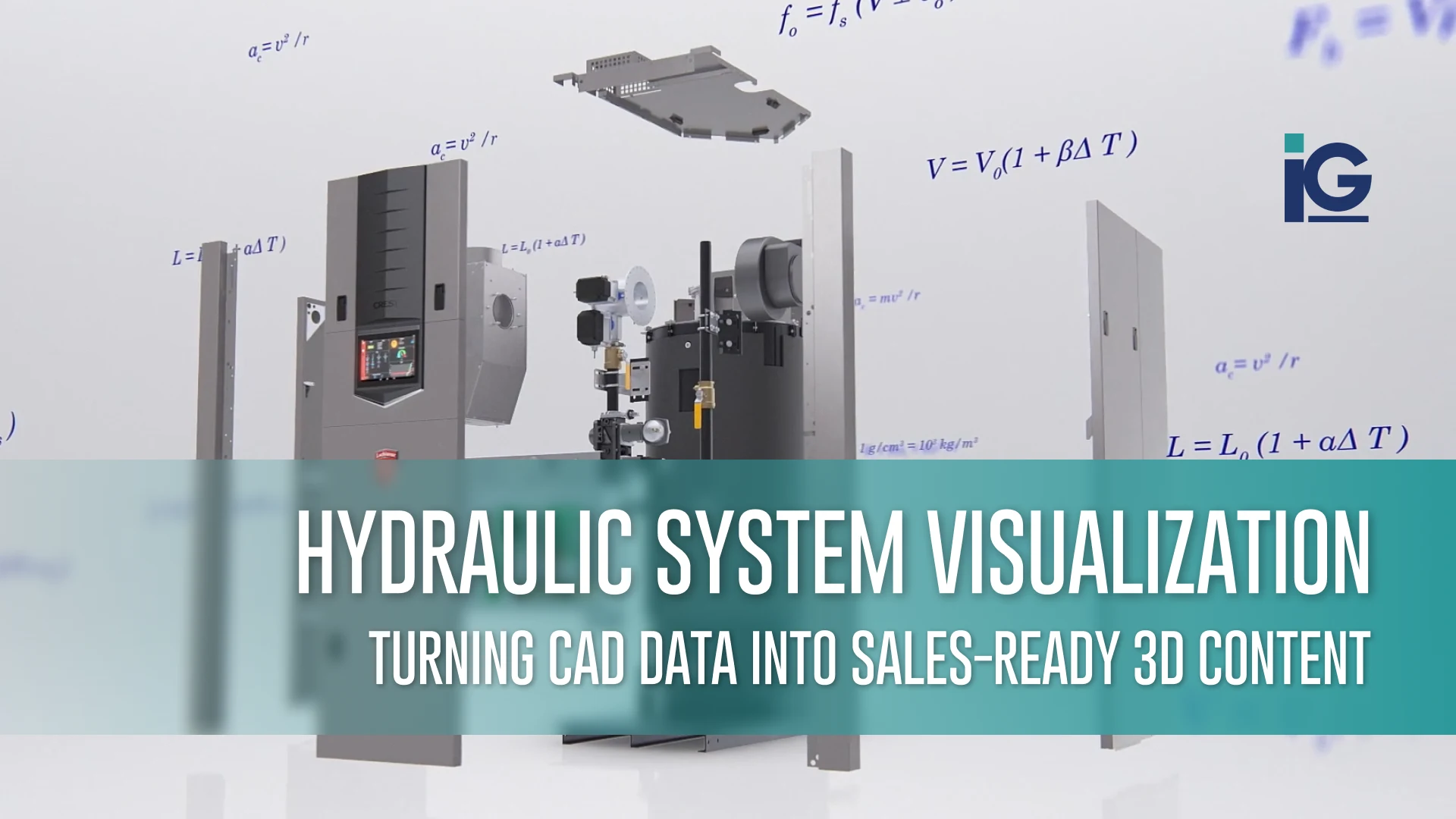
- Exploded-view diagrams that show internal components
- Assembly and installation visuals for technical documentation
- Product launch videos and animated demonstrations
- Sales Enablement and Training materials for internal teams and end users
- Tradeshow animations and videos
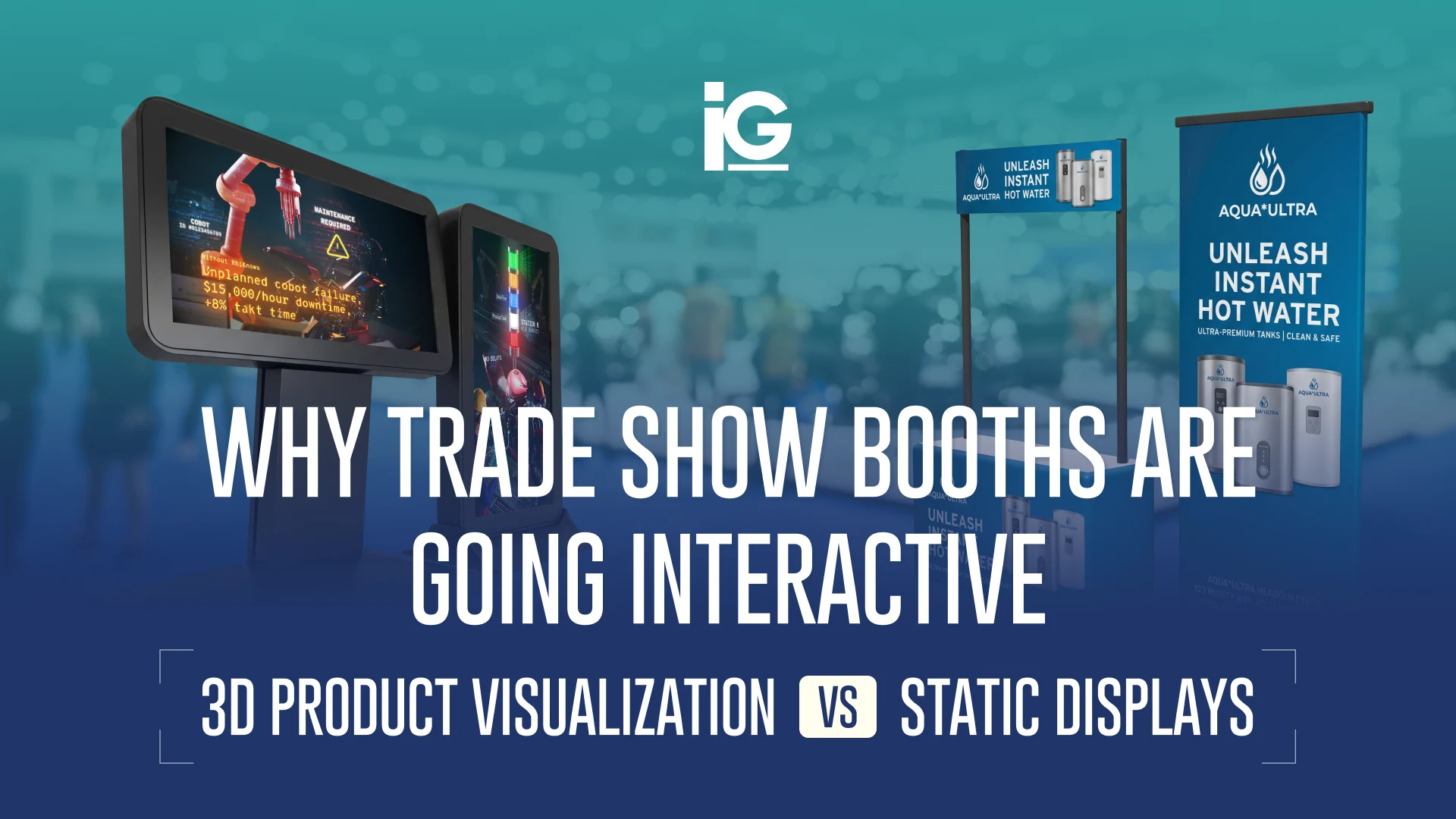
- Interactive 3D experiences for trade shows and e-commerce
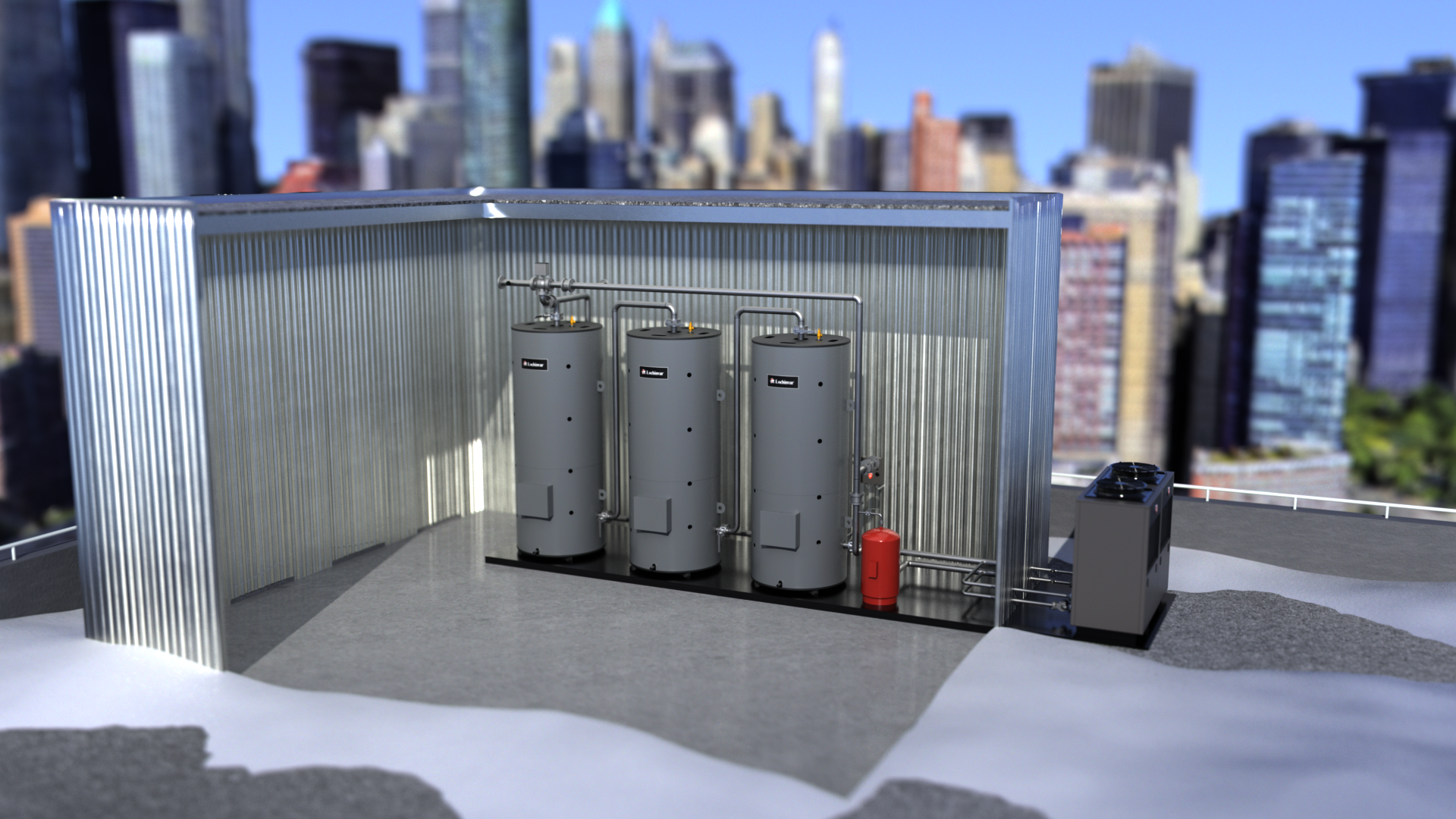
Info-Graphics’ CAD-based render of Lochinvar’s industrial boiler system, shown in a real-world rooftop installation environment.
Traditional Photography Has a Timing Problem
- Photography happens after the product exists
- Marketing often needs assets months before that
- Product managers are preparing launches
- Sales teams are preparing presentations
- Web teams are building product pages
- Distributors are requesting assets
- Photography forces ALL of those efforts to wait
CAD-driven visualization allows all of those activities to happen in parallel.
CAD Visualization vs Traditional Photography
Q: Can’t we just photograph the finished product?
You can, but industrial machinery photography is expensive, time-consuming, and logistically difficult. Large equipment requires controlled studio environments, specialized lighting, and professional crews. The cost can add up fast if you factor in equipment transport and rigging, and multiple shoot days to capture every angle and configuration. If the product is updated or a new variant is added, you’re booking another shoot.
CAD rendering eliminates most of those line items entirely. Even when your model is set up, it’s still possible to digitally add views, color variants, or entirely new configurations.
Q: How accurate is a CAD visualization compared to the actual product?
A CAD (Computer-Aided Design) is exceptionally accurate because it’s built from the same data your engineers trust to manufacture the product. It pulls from the exact dimensions, precise geometry, and defined surface properties of a machine. There’s no camera angle to work around, no lighting that washes out a key feature, no lens distortion softening a critical edge. What you see in the render is what exists in the design.
Q: Can we create renders even before manufacturing industrial machinery?
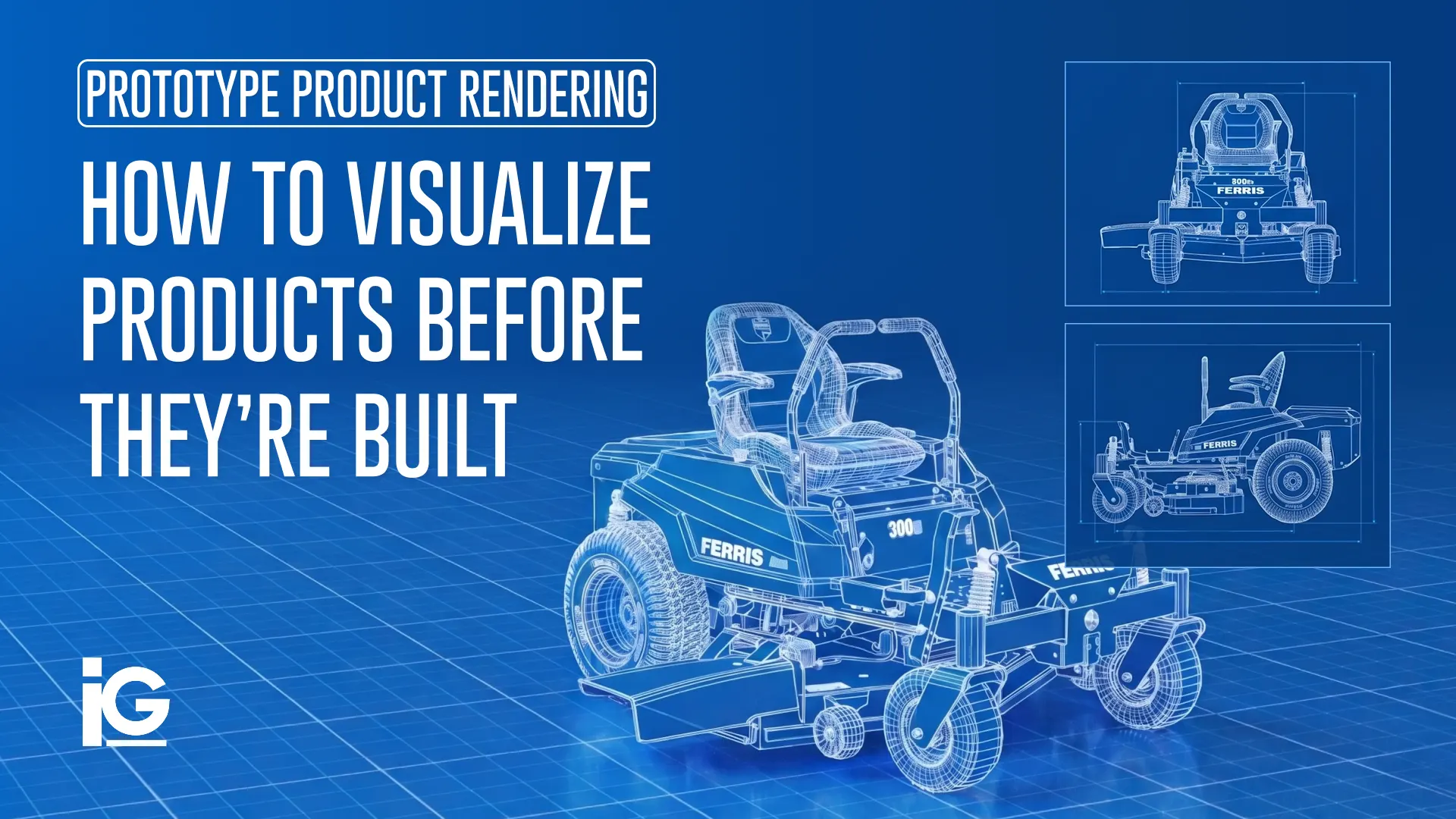
Yes, and for most of our clients, this is the capability that changes everything. Product launches don’t wait for manufacturing timelines, and neither should your marketing. At Info-graphics, we regularly produce photorealistic imagery before a single unit rolls off the line. By the time the machinery is ready to ship, so is everything else (product pages, sales presentations, campaign visuals, and ecommerce listings).
Why Product Managers Love CAD-Based Visualization
When launch dates move, content schedules suffer.
When prototypes are delayed, marketing stalls.
When physical samples are unavailable, sales teams have nothing to show.
CAD-driven rendering removes those dependencies.
Benefits include:
- Earlier launch preparation
- Faster stakeholder reviews
- Improved channel readiness
- Consistent branding across touchpoints
- Better alignment between engineering, marketing, and sales
What Our Clients Frequently Ask About Industrial Machinery Rendering
Q: What CAD file types do you work with?
We work with a wide range of CAD formats used across industrial and consumer manufacturing. The best way to find out if we can work with your files is to reach out to the Info-Graphics team. We’ll help you take a look at what’s possible before any work begins.
Q: How long does a typical rendering project take?
It depends on the scope and complexity of the project. We’ll give you a realistic timeline during our initial conversation so we can align deliverables with your launch date wherever possible.
Q: Do you sign NDAs?
We understand that CAD files represent some of your most sensitive intellectual property. Confidentiality agreements are standard practice for all client engagements. Reach out directly, and we’ll discuss the right confidentiality arrangement for your project.
Q: Can you produce multiple content types from the same model?
Absolutely, this is one of our core value propositions. Once a model is set up, we can efficiently produce still images, animations, interactive experiences, and documentation assets from the same source.
Q: What if our CAD model is incomplete or out of date?
Send us what you have so our team of experts can assess your files up front and flag anything that needs attention before work begins.
Everything You Need for Your Next Product Launch May Already Be Sitting in Engineering
At Info-graphics, we believe technical doesn’t have to mean boring. Industrial machinery can be stunning, especially when it’s rendered with the same attention to detail your engineers put into designing it.
Our creative team has deep technical roots built to be an extension of your marketing and engineering departments. All our work is based on 30 years of experience and our commitment to making your products look and perform their best across every channel.
If you have CAD assets and a product that deserves better content, let’s talk.
Contact Info-graphics to discuss your next rendering project.


Leave A Comment