
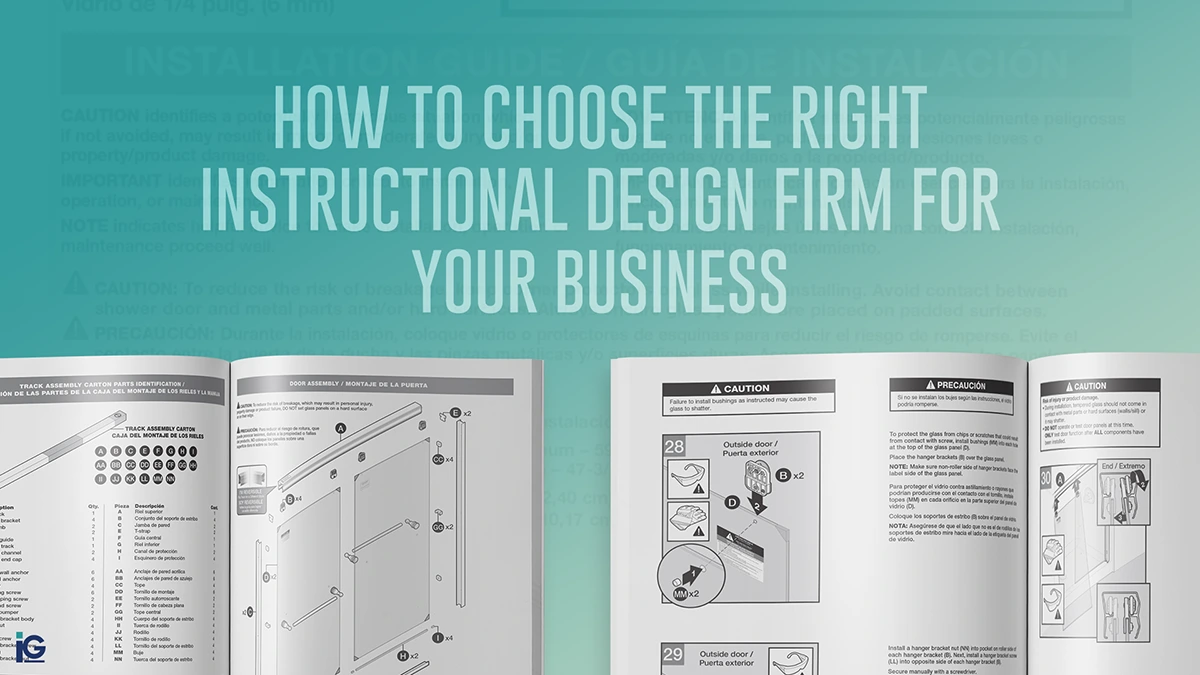
Ever handed a product to a client or distributor and immediately dreaded the follow-up call asking, “Where does this part go?” or “Why doesn’t this work?”
That moment of uncertainty is all too common—and in B2B settings, it’s more than just a customer hiccup. Poorly designed instructions don’t just cause temporary frustration—they interrupt critical operations, strain support resources, and diminish the perceived quality of your product.
Whether your business involves deploying industrial tools, tech hardware, or enterprise software across teams, a confusing manual can become a costly weak link. Clear documentation isn’t just nice to have—it’s mission-critical.
That’s why forward-thinking companies are turning to a professional instructional design firm with expertise in visual communication and product documentation.
Why Product Manuals Matter
1. Visualizing Product Features and Functions
Product manuals should do more than simply explain how to use a product. They should allow customers to see, understand, and visualize how the product works. This is especially important for complex products like machinery, electronics, or software, where written instructions alone may not provide the necessary clarity.
Detailed diagrams, color-coded layouts, and step-by-step visuals make technical content easier to digest. These elements can highlight system components, proper installation steps, and potential trouble spots that plain text may miss.
For example, instead of reading through five paragraphs describing how to install a filter, a customer can instantly grasp the process by viewing a clearly illustrated, color-coded reference. That’s exactly what we achieved for a client providing Automatic License Plate Recognition (ALPR) systems. Rather than relying on blocks of text, we designed a visual quick reference guide featuring labeled components, installation wiring paths, and optimal camera placement—all tailored to reduce guesswork and streamline field setup.

2. Improving User Engagement and Retention
Humans are visual learners. Research shows that visual aids significantly enhance learning and retention. For instance, a study found that illustrated text was 83% more effective in delayed comprehension tests compared with text-only versions. That means your instruction manual is far more effective when it includes visuals, animations, and interactive components. These elements not only simplify the learning process but also keep users engaged.
Interactive content such as clickable parts, animations, or AR overlays (viewable on a mobile device) can walk users through the setup step by step. Instead of flipping through pages, they’re guided through the process intuitively.
3. Reducing Customer Support Calls
When users can easily find clear and direct answers on their own, they are less likely to reach out to support. This leads to measurable cost savings over time. A recent study in the tech sector found that having well-written digital user manuals can reduce customer support calls by 30%.
Support teams can also guide customers to functional diagrams or interactive manuals instead of sending lengthy email responses, which helps reduce resolution time and customer frustration.
4. Supporting Global and Multilingual Users
Another significant benefit of visual manuals is that they cross language barriers. A customer in Germany and another in the U.S. may interpret written instructions differently, but a labeled diagram or instructional animation communicates universally. For international products, this reduces translation errors and increases global accessibility.
Take, for example, this Craftsman Smart Rider manual. After partnering with Info-Graphics to rework their materials, the resulting manual features multilingual instructions in English, Spanish, and French alongside clearly labeled diagrams. The clarity of visuals—combined with consistent formatting—ensures that users across different regions can operate the equipment correctly, regardless of their native language.
This visual approach enables companies to communicate more effectively while reducing the cost and complexity of translating extensive documentation. An experienced instructional design firm like Info-Graphics ensures these manuals are both globally accessible and locally understandable.

Signs You Need a Professional Instructional Design Firm for Product Documentation
Even if you already have manuals in place, several signs indicate it’s time to partner with a specialized instructional design firm for clearer, more effective product documentation
1. Your Manuals Are Hard to Follow
As quoted by the BBC from Tom to Roger Bridgman, a former curator at London’s Science Museum, “instructions are there to compensate for the inabilities of machines by employing the abilities of users, and therefore tell you something about the state of both at the time they were produced.”
If users are frequently confused or asking for clarification, your manual likely needs a redesign. A common issue is dense, poorly formatted content that’s difficult to follow. One example we encountered was a guide for changing engine oil. It lacked diagrams, buried safety instructions mid-paragraph, and used inconsistent formatting—making it not just hard to follow, but potentially dangerous.
Clear, well-structured instructions with visual guidance don’t just improve comprehension—they also reduce the risk of user error.

2. Increased Support Call Volume
Nearly 30% of after-sales tickets are due to poor or unread instructions. An instructional design firm can help you reduce service requests and costs by creating clear, engaging manuals that proactively address common “how-to” questions. In a world where customers turn to social media and email for support, strong instructional content is no longer optional—it’s a cost-saving necessity.
3. Your Manuals Lack Visual Aids
Images and media should clarify, not clutter. When used intentionally, they enhance understanding and bring instructions to life—especially for mechanical or hands-on products. But irrelevant visuals can distract and confuse.
Skip the filler. Focus on diagrams, videos, or animations that support the message. A skilled instructional design firm ensures every visual serves a clear purpose and improves the user experience.
4. Inconsistent Manuals Across Product Lines
Your product may be cutting-edge—but if the manual feels clunky or inconsistent, you’re sending the wrong message. Customers judge your brand by the entire experience, including support materials. According to Forbes, consistent communication across all brand touchpoints helps manage customer expectations and build trust. An instructional design firm can help align your documentation with your brand—standardizing tone, structure, and visuals to reflect the quality of your product.
5. You’re Relying on PDFs and Nothing Else
Modern users expect seamless access. If your content isn’t inclusive and intuitive, it’s invisible.
Today’s customers want more than just information—they expect to access it anytime, anywhere, and in a format that makes sense to them. Digital manuals deliver on that promise with features like mobile accessibility, searchability, interactive guidance, and even AR support. A 2023 study found that AR-based instructions improved task speed by 21% and reduced user workload by 26%—a clear sign that modern documentation isn’t just helpful, it’s essential. Still relying on static PDFs? It’s time to evolve.
Common Manual Mistakes and How the Right Firm Fixes Them
These are a few of the most common documentation issues—and how the right instructional design firm can help fix them.
1. Customers Get Confused
Disorganized steps and vague language create uncertainty. Instructional design firms use structure, visuals, and clarity to eliminate that confusion. Exploded 3D diagrams show precisely how components fit together, removing ambiguity.
2. Support Calls Increase
When manuals don’t address common problems, support teams get overwhelmed. A firm that anticipates those questions builds content that preempts them—with diagrams, interactive flows, and step-by-step walkthroughs.
3. Users Complete Tasks Incorrectly
Misinterpretation leads to misuse. High-quality manuals include zoomed-in visuals, highlighted callouts, and explanatory sequences that prevent errors and ensure proper product use.
4. Products Get Returned
Most returns stem from frustration, not product flaws. A clear manual guides users through early successes, building confidence and reducing churn.
5. Manuals Overwhelm Users
Too much information, poorly formatted, causes users to disengage. Instructional designers break content into digestible steps with strong visual hierarchy and user-friendly layouts.
6. Users Forget What They Learned
Retention is key. Visual anchors, repetition, and scenario-based instructions help users remember critical tasks and reinforce product mastery.
7. Expectations Aren’t Clear
Unclear timelines or missing tool requirements frustrate users. Good manuals manage expectations with estimated timeframes, prep checklists, and visible progress markers.
8. Manuals Create Bad First Impressions
An outdated manual undermines even the most advanced product. Clean, on-brand design with sharp visuals creates a premium customer experience from page one.
9. Documentation Is Inconsistent
If each product manual looks and feels different, it confuses users. The right firm will build a standardized documentation system that scales across your product line.
10. Training Takes Too Long
Poor manuals require extra explanation. High-quality, self-guided manuals shorten onboarding time with intuitive content that supports independent learning.
11. Compliance or Safety Issues Arise
In high-stakes environments, unclear documentation can lead to injury or regulatory issues. Instructional designers create compliant, visual-first safety materials that are impossible to misinterpret.
What to Look for in an Instructional Design Firm
When evaluating partners for visual instruction manual design or product documentation best practices, it’s essential to assess both creative capabilities and technical expertise. The ideal firm blends user experience thinking, instructional strategy, and advanced visual production—all with a deep understanding of your audience and industry.
1. Industry-Specific Experience
Look for firms that understand your space and have produced manuals for similar audiences. Ask for case studies, examples, and references.
2. Strong 3D and Multimedia Capabilities
Firms should offer 3D visualizations, animations, and interactive formats—not just text and illustrations. Info-Graphics excels in visual communication.
3. Human-Centered Design Process
From audience analysis to prototype testing, the firm should use instructional frameworks like ADDIE or SAM and align the design with the actual needs of your users.
4. Multi-Platform Output
Manuals should work on desktop, mobile, tablets, and potentially AR/VR. The firm should be able to deliver web-based, printable, and device-ready formats.
5. Ongoing Support and Scalability
Great manuals evolve with your product. Choose a firm that offers revision cycles, file access, and scalable documentation systems.
Red Flags to Avoid
-
- No visual portfolio or industry examples
-
- Overreliance on templates or boilerplate content
-
- Unclear timelines, vague deliverables, or poor communication
-
- No experience with your type of product or audience
A Real-World Outcome: The Impact of Visual Instructional Design
Modern instructional design isn’t just about aesthetics—it’s about usability.
The Trex Decking Installation Guide is a great example. Instead of long blocks of text, it uses clear diagrams, labeled components, and step-by-step visuals that walk users through the installation process with confidence. The result? A smoother experience, fewer errors, and less reliance on support.
When instructions are designed to be seen, not just read, they become part of the product experience. That’s the value of partnering with an Instructional Design Firm—turning your manuals into tools that get used.
A Manual Is More Than Instructions
A well-crafted manual doesn’t just explain—it empowers. Clear, visual instructions reduce confusion, streamline onboarding, and cut support costs, all while enhancing your customer’s first real interaction with your product.
Your manual is the first tool your user picks up. Done right, it builds trust and confidence. Done poorly, it creates frustration.
At Info-Graphics, we specialize in instructional design that’s functional, visual, and on-brand. By combining 3D renderings, UX principles, and practical storytelling, we create documentation that works as hard as your product does.
Ready to turn your manuals into an actual customer asset?
Connect with Info-Graphics to create user-focused, visually engaging guides that simplify support and elevate the entire product experience.








Leave A Comment