

Explaining complex equipment has never been easy.
Many organizations already rely on manuals, training guides, and internal documentation to explain how their equipment works. The challenge is that much of this information is difficult to visualize. 3D animation helps by showing how systems move, interact, and function, making existing systems easier to understand, easier to use, and more effective across training, sales, and support.
Most companies already invest heavily in documentation, training materials, and internal systems. Manuals are written. Diagrams are created. Processes are documented. Yet teams still struggle to understand how equipment actually works.
The problem is rarely the amount of information available. It is how that information is communicated.
This is where 3D animation can make a real difference. By visualizing how components interact, move, and function together, 3D animation helps teams derive greater value from the systems they already rely on.
What 3D Animation View Services Actually Do
3D animations create accurate, detailed visual representations of products, equipment, or systems. Unlike static images or flat diagrams, these animations show movement, depth, and real-world behavior.
They allow viewers to:
- See how parts fit together
- Understand internal processes
- Follow workflows step by step
- Explore products from multiple angles
As a result, teams evaluating animation support often look beyond visual style and focus on whether a provider truly understands technical detail and real-world use. Knowing what to look for in an animation partner helps organizations avoid surface-level visuals and choose teams that prioritize clarity, accuracy, and practical application.
Why Existing Processes Fail to Support Complex Equipment
Most organizations already have knowledge systems in place. These often include onboarding materials, technical manuals, training documentation, and support resources.
Where they struggle is with visualization.
Written instructions are difficult to picture. Diagrams flatten complex movement into static shapes. As equipment becomes more advanced, these gaps become harder to ignore.
This challenge is especially visible in product education and marketing, where complex products must be explained clearly to a wide range of audiences. When visual clarity is missing, even strong messaging can fall short. Clear, technically accurate animation helps bridge this gap by making complex products easier to understand without relying solely on written explanations.
How 3D Animations Improve Understanding
The value of 3D animation is even stronger when paired with interactive 3D viewing. Instead of relying solely on written instructions or fixed animations, users are guided through complex systems in a way that feels structured and easy to follow.
Interactive 3D views allow users to explore equipment while receiving clear on-screen guidance that explains what they are seeing and why it matters. Key components are highlighted as they come into focus, helping users connect individual parts to the larger system.
In addition to visual detail, voice-guided instructions add another layer of clarity. Rather than forcing users to read long explanations while interpreting a model, audio guidance walks them through how the system works step by step. This is especially helpful during training, onboarding, or first-time use, where too much information at once can slow learning.
Together, detailed visuals, written prompts, and voice guidance create a more effective learning experience:
- Users understand not just what a component is, but how it functions
- Instructions are easier to follow without jumping between documents
- Learning feels guided rather than overwhelming
- Information is easier to revisit and reinforce over time
Examples like the interactive 3D viewer used by Info-Graphics show how 3D animation can move beyond explanation and into true understanding. The goal is to help people learn complex systems with less effort and more confidence, while also being visually impressive.
Turning Concepts into Usable Knowledge
One of the biggest challenges in technical communication is turning abstract ideas into something people can actually follow.
3D animations help solve this by showing sequence, scale, and interaction, making it easier to understand how systems behave in real-world conditions. When animation is used to guide viewers through movement and process, complex ideas stop feeling theoretical and start feeling tangible. This approach is especially effective when visuals are designed to support learning and long-term retention, rather than just presentation.
For teams responsible for training, documentation, or customer education, this shift from explanation to understanding is critical.
Supporting Different Learning Styles
Not everyone learns the same way. Some people prefer written instructions. Others need to see movement and spatial relationships.
3D animation supports visual learners while working alongside existing text-based resources. They help knowledge systems become more inclusive without forcing teams to replace what already works.
When people can both read and see how equipment functions, understanding improves, and confidence follows.
Practical Use Cases Across Teams
The value of 3D animation becomes clear when applied across real teams and workflows.
Training and Onboarding
New employees learn equipment faster when they can see systems in action rather than relying solely on manuals.
Sales and Pre-Purchase Education
Buyers gain confidence when they understand how products work. Visual explanations reduce uncertainty and support better decision-making.
Documentation and Support
Animations complement technical documents by explaining processes that are difficult to describe with text alone. Static images often fall short of providing a true, one-to-one understanding of a product, especially when users need to see how equipment moves, operates, or is navigated in real-world conditions.
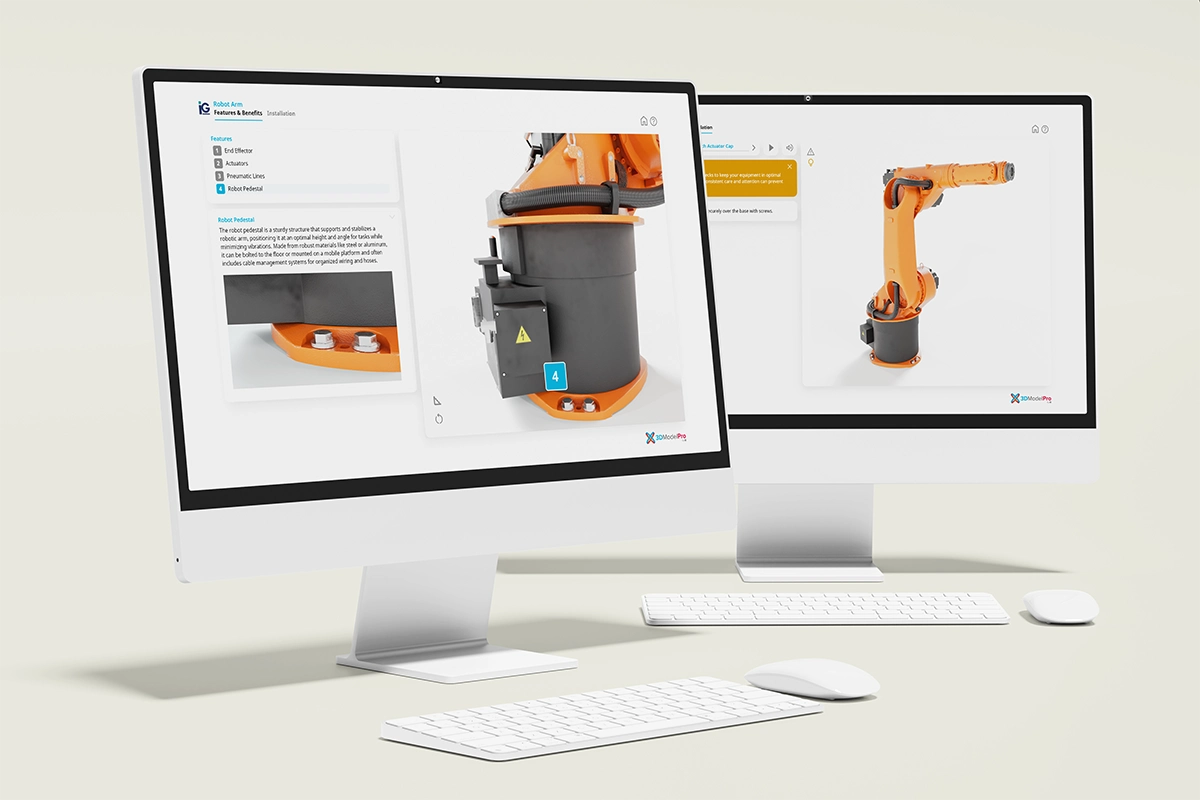
Modern 3D model viewers address this gap by enabling people to interact with models directly. When users can rotate components, explore how parts fit together, and follow movement from different angles, understanding improves without the need for additional explanation. Hands-on exploration gives users control over how they learn, making it easier to absorb information, revisit details, and apply what they have learned when it matters.
Across each use case, animation strengthens how existing knowledge systems perform by making information clearer, more practical, and easier to use.
Applying 3D Animation to Complex Equipment
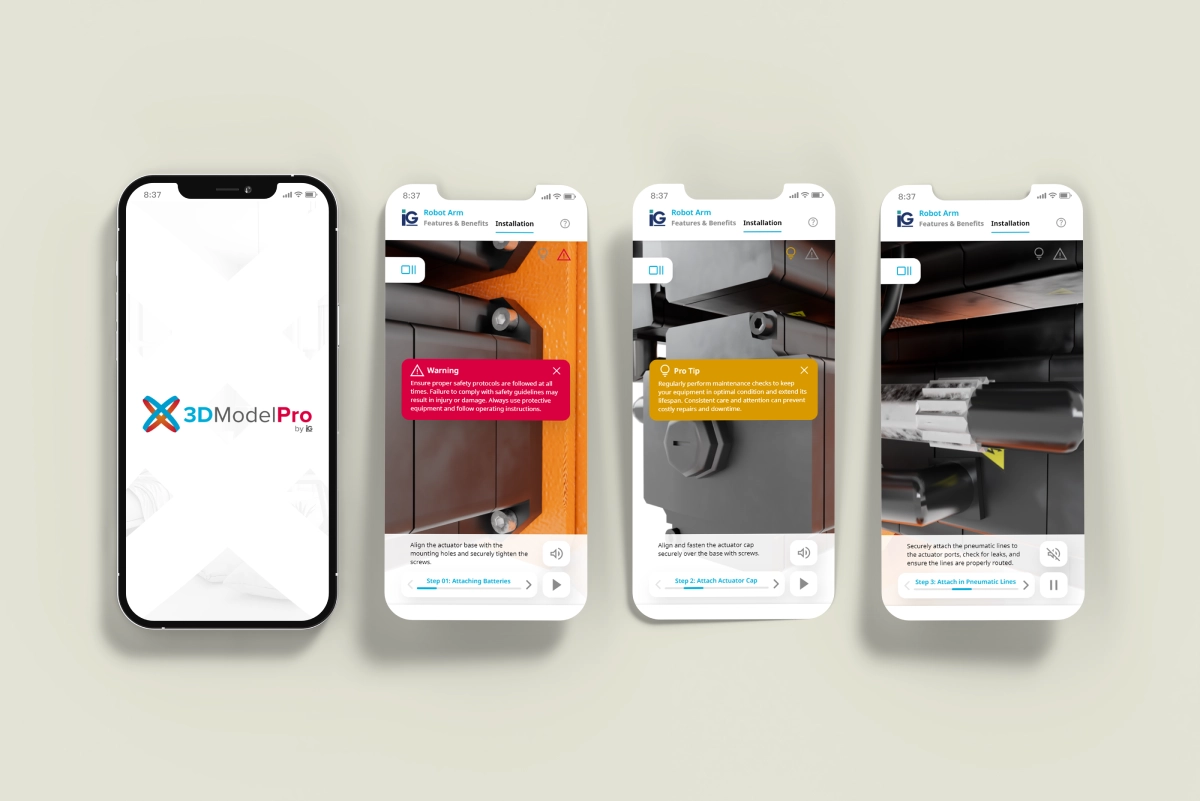
Projects such as the 3D Model Pro viewer show how detailed equipment can be translated into clear, accessible visual explanations.
Rather than overwhelming users with information, the animation focuses on structure, function, and interaction. This makes complex data easier to understand and apply, especially when paired with documentation or training materials.
The takeaway is simple. Effective 3D animation is not about adding more detail. It is about presenting the right information in a way people can follow.
Why This Matters Now
As equipment becomes more complex, expectations for clarity continue to rise. Teams want information that is easy to access and easy to understand.
3D animationshelp organizations meet these expectations by improving how knowledge systems communicate information. They reduce confusion, shorten learning curves, and help teams work more effectively with the resources they already have.
From Information to Understanding
Knowledge systems are only as effective as the understanding they create.
3D animation view services help close the gap between information and comprehension by showing what text and diagrams struggle to explain. When used alongside existing documentation and training materials, they improve clarity, reduce confusion, and help teams learn faster.
If you are looking to improve how complex equipment is explained across training, documentation, or customer-facing materials, Info-Graphics can help. Their 3D animation services are designed to clarify how products work and support the knowledge systems your teams already rely on.
Explore how Info-Graphics approaches 3D animation projects or reach out to discuss how visual explanations could support your equipment, processes, or learning goals.




Leave A Comment