

What happens when decades of hard-earned expertise disappear overnight?
That’s the hidden risk many companies face when veteran employees retire or move on. Their knowledge—everything from efficient workarounds to critical quality checks—often isn’t written down. And once it’s gone, rebuilding it is nearly impossible.
This is why knowledge transfer is more than a nice-to-have—it’s the backbone of operational continuity. When insights aren’t captured and shared, organizations lose more than just information; they lose time, efficiency, and competitive advantage.
Nowhere is this more urgent than in household appliance manufacturing, where experienced workers are retiring, product lines are evolving, and competition from cheaper alternatives is fierce. Without a structured way to retain and distribute knowledge, manufacturers risk eroding both quality and innovation.
That’s where E-Learning Design Services come in—transforming tacit know-how into secure, standardized training that keeps companies sharp, consistent, and future-ready.
The Knowledge Transfer Dilemma in Appliance Manufacturing
While efficiency and safety are constant priorities, today’s fundamental challenge goes deeper: how knowledge is created, shared, and preserved across the workforce. In appliance manufacturing, the ability to transfer knowledge effectively can determine whether a company maintains product quality, protects intellectual property, and stays competitive.

1. Quality at Risk
A structured knowledge transfer program enhances decision-making by providing leaders with access to proven insights, best practices, and the collective experience of the organization. With this foundation, decision-makers can identify risks earlier, seize opportunities more confidently, and make informed strategic choices grounded in real-world knowledge.When training is inconsistent, however, the opposite occurs. Slight variations in assembly or testing can snowball into defective products, costly recalls, and lasting damage to brand reputation.
2. Knowledge Attrition
When a business owner prepares for succession, whether selling the company or transitioning leadership to a trusted executive, capturing institutional knowledge becomes critical. Much of a company’s competitive edge resides in the experience of seasoned employees, yet this expertise often goes undocumented. Without a structured way to preserve and transfer it, years of know-how can vanish the moment key people retire or move on, leaving costly gaps for the next generation to fill.
3. Patent and Process Security
Patented methods and proprietary processes are core competitive assets. Without proper training and controls, sensitive know-how can be exposed or misused, putting IP at risk. Effective patent knowledge management, as highlighted by the European Patent Office, not only protects these assets but also supports secure technology transfer and long-term value.
4. Global Workforce Alignment
Appliance manufacturers operate across multiple countries, cultures, and time zones. Without a unified system, knowledge transfer becomes fragmented—leading to misinterpretations, uneven training, and productivity gaps. Effective knowledge-sharing, as noted by the Project Management Institute, strengthens collaboration and reduces inefficiencies. Embedding strong global mobility functions, as highlighted by Remotely Works, helps align people and processes worldwide, ensuring consistent outcomes across the workforce.
How E-Learning Design Services Solve the Problem
For organizations, strong knowledge transfer supported by tailored e-learning solutions helps safeguard quality, protect intellectual property, and align teams across multiple locations. By capturing and standardizing expertise, businesses minimize risks, accelerate onboarding, and ensure consistent performance—whether preparing for succession, expanding globally, or scaling operations.
Capture and Codify Expertise
In many organizations, the most valuable knowledge doesn’t reside in a manual; it lives in the heads of senior engineers and technicians. When they retire or move on, that expertise risks disappearing with them. Well-designed e-learning turns this know-how into digital blueprints, breaking complex processes into clear, structured modules that remain accessible long after the experts have moved on.
A good example comes from the Brewing and Distilling Center in Knoxville. Instead of relying solely on in-person instruction, they built multi-module online courses that guide students through every stage of the brewing and distilling process. Each lesson includes interactive quizzes that not only engage learners but also reinforce retention. The result is a scalable, lasting resource that preserves critical knowledge for the next generation of brewers and distillers.
Standardize for Quality and Compliance
Interactive, step-by-step lessons ensure that employees — whether in Ohio, Manila, or Mexico — follow the same approved process every time. This consistency prevents knowledge drift, reduces human error, and protects overall product quality, while also making compliance requirements easier to meet.
Protect Intellectual Property
Protecting IP in manufacturing goes far beyond patents. It can include images, CAD drawings, and even the documentation of processes. A Business of Home article highlighted that even something as simple as a product photo can be stolen and repurposed without permission — eroding the value of the original creator’s work.
E-learning design services reduce that risk by keeping sensitive training materials inside secure, access-controlled platforms. Modules can be limited to authorized staff, tracked for usage, and centrally updated, so proprietary methods and visuals stay contained. The result is a training system that not only educates but also safeguards critical know-how, ensuring it reaches the right teams — and only the right teams..
Enable Rapid Updates
When new models or methods launch, updated modules can be deployed instantly across global sites. That means no delays, no misinterpretations — just accurate knowledge transfer from day one.
We’ve seen how critical this is in practice. Broan | FAS, for instance, used to rely on in-person workshops to train dealers on their air filtration systems. It was costly, time-intensive, and hard to maintain consistency across markets. By moving to interactive e-learning with animations, scenarios, and built-in knowledge checks, they created a training program that’s both repeatable and always current. Dealers now have on-demand access to training that evolves with the products — without the logistical headaches of flying people in.
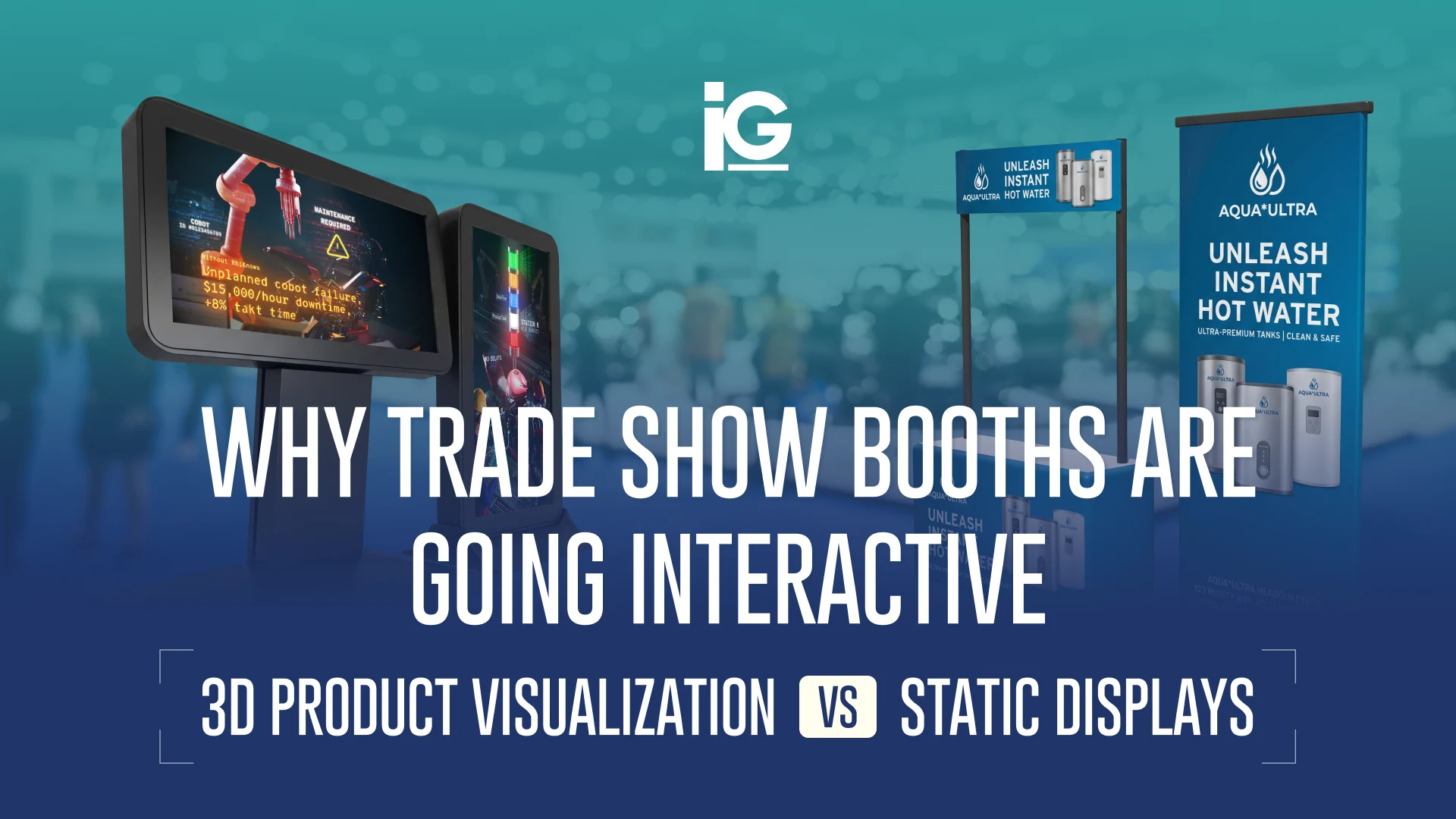
Interactive visuals — like 3D product models — can make complex processes even easier to understand and update, ensuring that technical knowledge is both accurate and engaging.
Provide Measurable Proof
In most traditional training methods, once the workshop ends or the manual is handed out, there’s no real way to confirm whether employees truly absorbed the material. For industries that live and die by compliance — from appliance manufacturing to healthcare — that’s a serious blind spot.
Interactive learning modules eliminate the guesswork. Every program can include built-in assessments, knowledge checks, and simulations that not only teach but also verify understanding. Completion data and performance reports give leaders hard evidence of workforce readiness.
We’ve seen companies use this capability to walk into ISO audits and warranty reviews with complete confidence. Instead of scrambling to prove employees were trained, they can show documented results that trace back to specific procedures and compliance requirements. It shifts training from “we think they know” to “here’s the proof they do.”

Business Impact of Knowledge-Centered E-Learning
By investing in e-learning design services focused on knowledge transfer, appliance manufacturers can:
- Safeguard Intellectual Property by controlling how proprietary methods are taught.
- Preserve Critical Expertise by capturing insights from senior staff before they leave the organization.
- Protect Product Quality through standardized training and assessments.
- Reduce Liability by documenting compliance and safety training.
- Future-Proof Workforce Development by ensuring new hires gain the same depth of expertise as experienced employees.
What if your company never lost critical know-how again?
Every organization reaches a point where experience becomes its most valuable asset, and its most fragile. When veteran employees retire or move on, the lessons they’ve learned over decades don’t stay behind. Left unaddressed, that gap creates a ripple effect: missteps in production, lapses in compliance, and lost competitive ground.
E-learning design services offer a way to close that gap before it opens. By turning tacit knowledge into structured, interactive training, companies can protect proprietary methods, standardize processes across global teams, and create verifiable proof of workforce readiness. It’s not just training — it’s an infrastructure for resilience.
At Info-Graphics, we’ve helped manufacturers transform knowledge transfer from a reactive scramble into a proactive strategy. The result is a learning ecosystem that safeguards intellectual property, strengthens product quality, and equips teams for both today’s challenges and tomorrow’s opportunities. See how we make that possible here.
FAQ: Knowledge Transfer and E-Learning in Appliance Manufacturing
Why is Knowledge transfer a challenge?
Because when veteran employees leave, undocumented know-how disappears, creating risks for quality and compliance.
How does e-learning protect patents and IP?
Training stays inside secure platforms with controlled access, so only authorized staff can view sensitive processes.
Can e-learning preserve staff expertise?
Yes. Expert demonstrations can be captured and converted into digital modules for future teams.
How does e-learning improve product quality?
By standardizing training, all employees follow the same approved procedures, thereby reducing errors and defects.
Is e-learning scalable for global operations?
Absolutely. Modules can be localized into multiple languages and deployed instantly worldwide.





Leave A Comment